
Jason Hiner
Jason Hiner is the Editor-in-Chief and Chief Content Officer of The Deep View. He's an award-winning journalist who has spent his career analyzing how tech has reshaped society. He covered AI for over a decade at ZDNET and CNET as it evolved from research labs to enterprise infrastructure to a daily reality for over a billion people. He came to The Deep View to cover AI every day and build a next-generation media company.
Articles
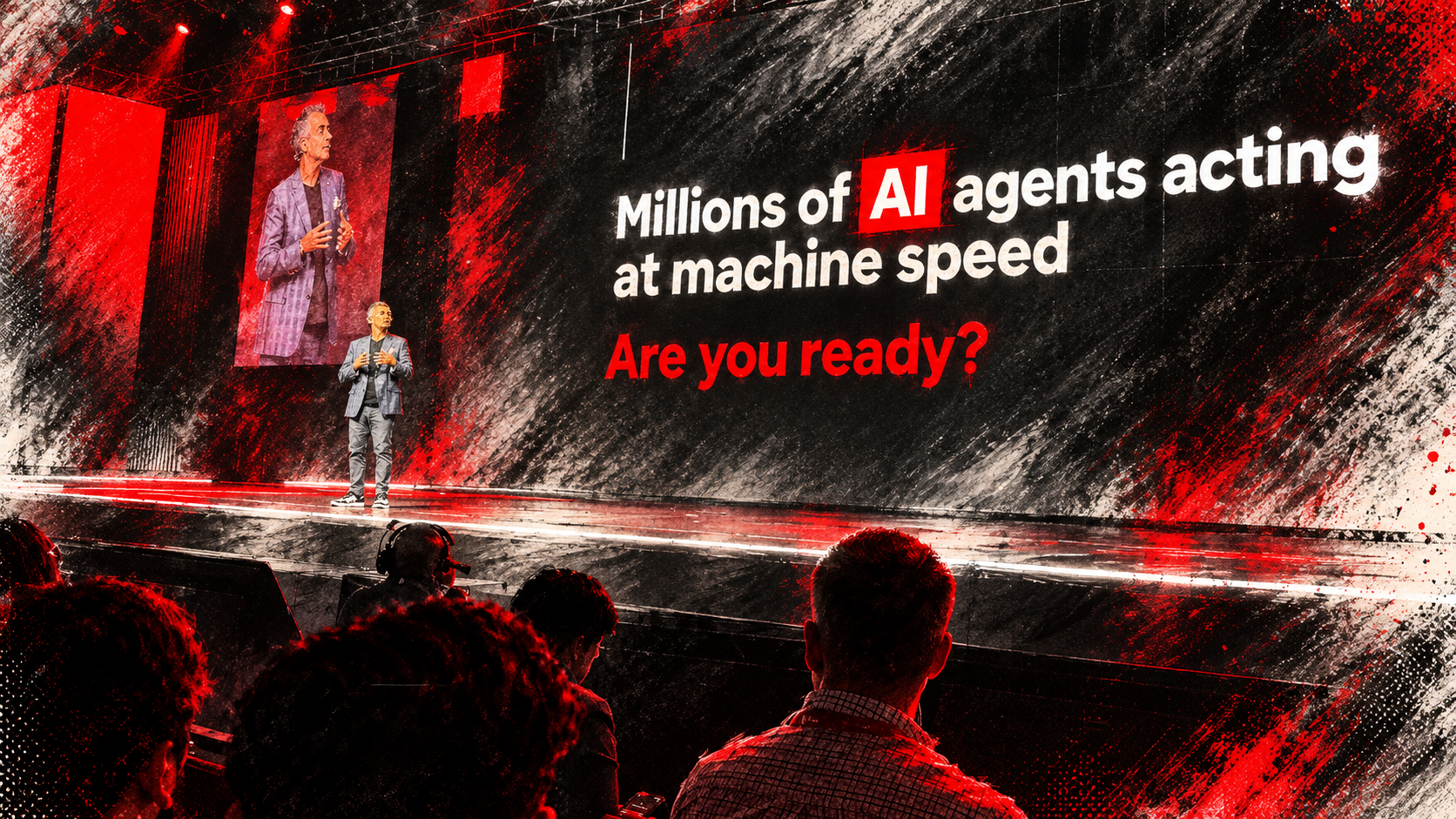
Security's new dilemma: Agents reason differently
AI is accelerating familiar cybersecurity threats, but according to CrowdStrike's chief product officer AJ Shipley, speed and scale are only part of the story. AI agents can also assemble known tactics, techniques and procedures into unfamiliar attack chains, requiring existing security controls to adapt.
In a conversation with The Deep View at CrowdStrike's Fal.con event, Shipley discussed why organizations will need AI to defend against AI-enabled adversaries, how automation could change entry-level cybersecurity jobs, and why enterprises shouldn’t consider themselves outmatched. This interview has been edited for brevity and clarity.
Jason Hiner: How is AI changing cybersecurity?
AJ Shipley: I think, from my perspective, there's really two things that are interesting to think about from the perspective of the defender. One is something that we've been dealing with for the last several decades. It's just a matter of pace or how quickly things happen, and then the other one is net new, which is really interesting.
I think obviously AI-enabled adversaries are really just allowing those same bad actors to enumerate vulnerabilities and ultimately exploit vulnerabilities in order to further their means. Whether it's cyber warfare and advanced kinetic warfare, or whether it's stealing intellectual property, it's just allowing them to do that so much faster, and with so much more scale, as well as being able to find previously undiscovered vulnerabilities to then be able to exploit.
But for better or worse, the approaches to how you defend against that are the same approaches we've been using for the last 20 or 30 years. It's just a matter of pace on the defensive side. And so you have to use AI tooling in order to just be able to respond to the AI adversaries or the AI-enabled adversaries.
The other piece, though, which I think is really, really interesting, is the way these agents reason is fundamentally different than how people reason. And the last 10 or 20 or 30 years of security products have been built on this foundation of this intuitive understanding of how humans reason, either threat actors or adversaries or defenders, and how they're going to reason to try to respond to them.
What's different is that agents reason differently.... How these agents are putting together TTPs [tactics, techniques, and procedures] into attack chains that are fundamentally different than anything that we've ever seen before, and then how we have to be able to build defenses to those fundamentally different approaches to reasoning their way towards a problem, I think is something that we're very much focused on.
Jason Hiner: What makes AI agents so difficult for human defenders to handle?
AJ Shipley: These agents, I don't think, are inherently malicious or benign. I mean, I think you can probably build a malicious agent, but I think they are so task-oriented that they're going to try to find a way to accomplish their task, however they can.
Every TTP, every vector. I don't think that they're coming up with necessarily novel new techniques. Maybe they will in the future, but they're stringing TTPs together in a way, and then doing them at a pace and a scale that is impossible to respond to unless we are enabling the defenders with the same AI tooling.
I know that there's a zeitgeist out there around, "Hey, is AI and are agents going to replace security professionals?" I tend to be in the camp where I don't think that they will. And the reason for that is because there's two ways to increase productivity. You can do the same amount of work with fewer resources, or you can do more work with the same number of resources. Both of those are productivity gains.
I think in an AI-centric cyber world with an AI-enabled adversary, just the sheer scale means that we have to figure out a way to increase productivity. And one of the ways you can increase productivity is to do more work with the same number of resources. So those same number of resources are people. Which means, how are you going to enable those same number of people to do more work? With the AI tool.
That's what we're very much focused on: How do we use the agents or the tooling in order to make the defenders as productive as possible, not to replace the defenders? Because, again, I just think the data volumes are exploding, the way to chain together tactics and techniques in new, novel ways is exploding, and so you still need all of that expertise that people have. But we have to find a way to increase their productivity 10x or 100x.
Jason Hiner: How will AI change the work of cybersecurity analysts?
AJ Shipley: I definitely think that there are workflows, for lack of a better term, that AI will be able to fully automate away.
In the SOC [security operations center], we might say, "Hey, tier-one triage of just a whole bunch of alerts coming in." That's probably something that an agent's really good at. And then maybe some level of tier-one or tier-two investigation to figure out what's a true positive versus a false positive. That's probably something that an agent's really good at: doing that first gathering of evidence and synthesizing the evidence and coming up with a hypothesis, and then maybe testing some alternate hypotheses.
And I think that's where you still want a person in the role, stepping into that. And then the tier three, the incident response-type stuff: How am I going to take action now that I've confirmed that this is an incident?
I think this idea of what is an entry-level job probably moves up the stack from a tier one, tier two, tier three. Historically, entry-level was: You're going to be a tier-one analyst. You're going to start triaging a bunch of alerts. After a couple of years, we're going to let you start doing some investigation. And then when you get really good at it, we're going to let you do some incident response.
I think now we're going to start training humans and enabling them with tooling so that they don't have to do the tier-one menial-type work that they couldn't even keep up with anyways. Before, there was just this explosion of alerts, but now the whole idea of entry-level is just going to move up the stack, like a tier two or tier three.
That doesn't mean that this idea of entry-level jobs goes away. It means that what is the definition of entry level? It now becomes a higher-value skill set.
Jason Hiner: Will AI help organizations eliminate longstanding security weaknesses?
AJ Shipley: If you think about the cyber environment as a battle space, or a battlefield, there have always been advances in technology. Bronze Age, Iron Age, bow and arrow, gunpowder, naval warfare, atomic bombs. There have always been these advances in technology around quote-unquote warfare, where it felt like maybe at the time that the person who came up with the technology, or the side that came up with the technology, was like, "They're going to win". And then somebody else comes up with a way to defend against it. And then somebody else comes up with a clever way again to exploit it.
I tend to think that the AI tooling will expose where there's a lot of weaknesses where we didn't understand before. It will help us close a lot of those weaknesses. And if history is any guide, there will be something else that comes down the pipe in the future that exposes a whole bunch of new weaknesses that we're probably not even aware of.
I think that we will be a lot more informed on where there are vulnerabilities and where there are weaknesses, and then we will use the tooling to address those vulnerabilities and weaknesses. And in my experience, if history is any guide, there will be something else right around the corner in the future that we're then going to have to figure out: How do we respond and react to that as well?
I don't know what that thing is, but I tend to be an optimist. And just in general, I tend to think that when we figure that out, or when we encounter that thing, we'll figure out a way to defend against that as well.
Jason Hiner: What does the best-case outcome look like three to five years from now?
AJ Shipley: Five years is an eternity. If all goes well, I think we have built a fully redundant and resilient system, leveraging the tooling across all facets of the attack surface—endpoint, cloud, SaaS, network—to protect all of the assets that an organization cares about: their identities, human and non-human; the devices that those identities use to do their job; the applications that they use to do their job; the data that gets created.
Again, if all goes well, we've used really sophisticated and well-trained red models to identify vulnerabilities across all facets of that attack surface, and then we've used blue models to be able to remediate those vulnerabilities to the point where they're no longer exploitable. And then we can truly be able to take a vacation. That's the bull case, I think.
Jason Hiner: How can defenders account for the non-deterministic nature of AI models?
AJ Shipley: I think this idea of an ensemble of models, and having different models be able to vote on each other and weigh in, I think is ultimately what will address the non-deterministic nature, as well as harnesses.
I think there are mechanisms to be able to control the inputs such that you get a deterministic set of outputs. It's when little things change. For example, your input data set might be in a different schema. It might have a different timestamp. It might be asking the question slightly differently.
So I think a combination of harnesses, a combination of ensemble models, a combination of basically being able to get to weighted outcomes. And this is not all that much different, even from when I remember we were doing cloud-based sandboxing, malware analysis. You'd have a lot of different detection engines up there, and one detection engine might say that's malicious. One might say, "Not really sure." One might say benign.
And so how do the different detection engines, or the models at the time, the ML models, static or dynamic analysis, contribute to be able to make a determination of, "Hey, we think 80 or 90 percent of the way there that this is truly malicious."
Jason Hiner: What would you say to enterprises that fear they’re outmatched?
AJ Shipley: I would say they're not. They're not, at least in my opinion, they're not outmatched. Anytime there's been an inflection point in technology, technology has traditionally come along to significantly improve the productivity of civilization, and we've all benefited from it. AI is no different there. That technology obviously can be used for good, or it can be used for evil.
I would say embrace the technology, because it can be a productivity enhancer, and then make sure that you're partnering with somebody who's thinking about how to make sure that technology has the appropriate guardrails, that you have the appropriate visibility, that you can be able to detect when that technology is being used maliciously or inadvertently, and then you have all of the mechanisms and tools that you need to be able to respond to make sure that it doesn't happen again.
Some of what's old is new again. This is just an inflection point from a technology perspective. It's obviously driving a different pace that we have to be able to keep abreast of. But this technology doesn't use itself. It's not like there's an agent that just popped up out of the blue without somebody spinning up an agent and decided to go start acting rogue. There's people who are using this technology.
So partner with somebody who understands the adversary, who's always been focused on the adversary, is focused on understanding their tactics, their techniques and their procedures to partner with, so that you can then be an enabler of that technology in your organization in order to increase productivity.

How Meta suddenly re-emerged as a force in AI
As Meta emerges from rebooting its AI strategy, it's become clear that it's playing a different game than the other AI labs. It looks like it could be working.
At Meta Connect 2026 this week at the Meta headquarters in Menlo Park, California, we learned a lot more about the strategy Meta is deploying to earn a role in the AI ecosystem. Over the past few weeks, Meta's personal AI agent, Muse, has gone viral and become the No. 1 most downloaded app on Apple's App Store.
At Meta Connect, Muse was part of virtually every product line and every marketing pitch. Meta made it very clear that Muse is the centerpiece of its AI strategy, using both its AI models and its devices to serve the Muse strategy.
New developments include:
- Voice Mode: You'll soon be able to have natural voice interactions with Muse similar to ChatGPT Voice Mode and Siri AI, where you can interrupt it up and talk more conversationally. You'll be able to design and customize the voice based on talking speed, style, and accent.
- Realtime Avatar: Meta already gave its AI agent a more friendly consumer vibe by launching avatars that you can name and customize. It announced the next stage of that at Connect with the upcoming rollout of interactive avatars, which CEO Mark Zuckerberg demonstrated on-stage near the beginning of the keynote.
- Partner connectors: Meta announced a long list of partners that will be launching connectors for Muse, including GitHub, Box, Granola, Notion, PayPal, Instacart, Walmart, Best Buy, Gap, Dick's Sporting Goods, Wayfair, Michael Kors, and more.
- Computer use on Mac app: Meta has already launched a Mac desktop app (no Windows or Linux yet) and next it will be launching Computer Use, which will let you access other apps and sites that don't have connectors, among other things.
- Its own email address: Muse will soon get a dedicated email address that you can use for communicating with it, along with allowing it to do specific work on your behalf without using your email.
- Hands-free on AI glasses: Meta says you'll "soon" be able to call on your personal Muse agent by simply saying its name from Meta AI glasses and then asking it questions or assigning it tasks. If you use it from Meta AI glasses with cameras then you'll also be able to give it access to the cameras and ask it questions about things you're seeing.
- Charm pendant: The biggest surprise at the end of the Meta Connect keynote was Zuckerberg announcing a square AI pendant on keychain so that you will be able to access your Muse agent anywhere. Think of it as the AI hardware gadget for those who don't want to wear glasses. It will have a 2-inch OLED screen to see the Realtime Avatar of your muse, along with 5G for connectivity, two cameras, a fingerprint sensor, and mics and speakers. It's about the size of an AirPods case.
In the keynote, Meta's chief AI office, Alexandr Wang, also shared news of the company's next big leap forward in intelligence. He said, "Soon, we're dropping the most capable model we've ever trained. It's going to help our entire model family get smarter and more useful for everyone, including the models that power Muse."
Our Deeper View
Downloads of the Muse app are currently outpacing the meteoric launch of the ChatGPT iOS app in spring of 2023, but there's one big caveat. Meta runs one of the world's most powerful advertising platforms with Facebook and Instagram and it has been using it to drive massive numbers of downloads. It's smart and tells us a lot of consumers are interested in AI agents, but it doesn't tell us how many of them are actually setting up their own AI agent and starting to use it. OpenAI has shifted away from consumer apps in 2026 to focus on coding and enterprise like rival Anthropic, as both look to drive revenue and business model growth ahead of massive IPOs. Meanwhile, Meta has a treasure chest of revenue from its advertising business that it can use to play the long game on consumer AI. It also has the consumer relationships and the in-house expertise for running consumer brands, and it shows in how friendly it has made Muse—by far, the easiest agent to get up and running. The big question, of course, will be trust. Meta will need to convince consumers to trust it with some of their most important and most private data in order for its agent to have the context it needs to be effective. While it's good to see Meta taking steps like the Muse Secure VM to ensure privacy, it's going to need to demonstrate consistently that it's making privacy and security a top priority. That's because trust comes in on foot and goes out on horseback, as the saying goes. And given Meta's challenging track record, the company will need to change the narrative and entice some people to come back in.
Disclaimer: Jason Hiner's travel to Meta Connect 2026 was paid for by Meta. The Deep View's coverage is editorially independent from the companies we cover.
AI safety needs more than good intentions
Can AI move fast and still be safe? As the debate over AI safety and innovation grows more polarized, we explore the practical work of making powerful systems accountable.
In this episode of The Deep View Conversations, we sit down with Navina Singh, CEO of Credo AI, to talk about what AI governance means for frontier labs, enterprises, and policymakers. They explore why governance is broader than regulation, how organizations can test and verify their AI systems, and what happens when capabilities advance faster than oversight.
Topics covered:
• Why Navrina sees AI safety and innovation as goals that can advance together
• What the Hugging Face agent incident raises about frontier AI oversight
• The “spectrum of trust,” from internal testing to independent audits and regulation
• The risk of regulatory capture and the role of open models
• How businesses weigh AI capability, cost, and control while managing "governance debt"
• How Credo AI uses forward-deployed governance experts to help companies put oversight into practice
• Why expertise, taste, and judgment remain valuable as AI takes on more work
If you’re building, buying, or governing AI, this conversation offers a practical way to think about trust without losing sight of the technology’s promise.
📺 Watch on YouTube
🎧 Listen in your favorite podcast player
Subscribe to Deep View Conversations for interviews with the leaders shaping the future of AI, business, and technology: tdv.transitor.fm
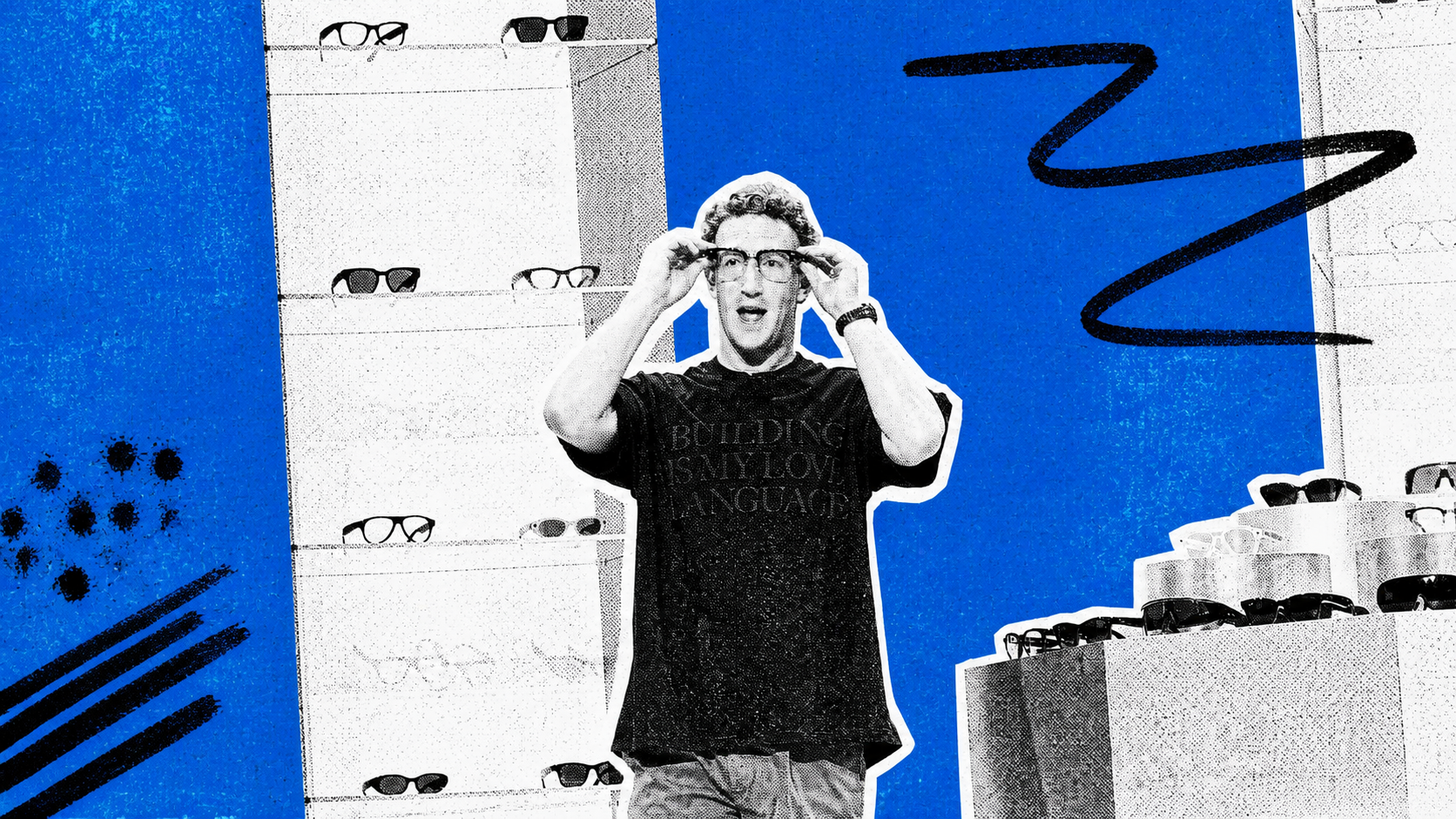
How Meta made AI glasses easier to trust in one move
The best part of Meta's latest AI glasses is a feature that they removed.
On Wednesday, Meta announced the Meta Ray-Ban Audio glasses, which do not have any cameras, and as a result, weigh less, have better battery life, and are less expensive. But most of all, the glasses let you get the audio and AI benefits without people giving you the stink eye because they think you're wearing spy glasses.
"The audio features are our most popular features: listening to music, making phone calls, and talking to AI. We thought that by really just focusing on audio, we could make the glasses way slimmer and lighter with way longer battery life," Ming Hua, Meta's VP of wearable devices, told The Deep View. "The whole consideration is to expand into a new segment and give people new options."
Hua said that Meta has been developing the camera-less version for the past two years. During that time, Meta's AI glasses have received bad publicity from consumers and businesses concerned about the glasses recording video of people without their knowledge or permission. At the same time, the glasses have been praised for their surprisingly good audio quality, the convenience and safety of the open-air audio design, and the fact that the glasses are stylish to wear and don't look like a tech product.
Here are the details of the Meta Ray-Ban Audio glasses:
- 6 microphones (an upgrade from 5 mics on previous glasses)
- 12 hours of battery life (up from 8 hours in Gen 2 Meta Ray-Bans and 4 hours in Gen 1)
- Weigh 43 grams (about 10-20% less than most other models)
- Adjustable temple tips and adjustable nose pads
- Two styles: Clubmaster (looks like 1950s geek glasses) and Burbank (looks like traditional geek glasses such as the Ray-Ban Wayfarer)
- Start at $349
- Begin shipping October 13
And future generations of these audio-only glasses look promising as well, since earlier today Qualcomm announced its Snapdragon Sound Elite Gen 2, a chip aimed at next-generation audio and voice wearables.
Meta also doubled-down on audio technology in general by launching a new software feature called Hearing Enhancement, which uses software to turn Meta glasses into an FDA-cleared over-the-counter hearing aid with some very smart features. With a 5-minute onboarding routine, it can understand your hearing and then boost particular frequencies to help. It also has a directional feature that only boosts the audio of the person you're looking at. Since 1 in 6 people suffer from mild to moderate hearing loss and the Meta software is a one-time $149 fee (compared to $1,000 to $8,000 for the average prescription hearing aid), I expect this feature to be very popular when the software starts shipping later this fall.
Our Deeper View
At the Meta Connect 2026 event this week, I tried the Meta Ray-Ban Audio glasses and the new Hearing Enhancement feature (using a pair of ear plugs to simulate partial hearing loss). Both worked very well and I consider them both welcome developments. After using various models of Meta AI glasses over the past two years, the audio features were by far the most used things for me. But I limited how much I used the glasses because of the cameras and not wanting anyone around me to fear I was invading their privacy. Across all of its Ray-Ban, Oakley, and other product lines, Meta has sold around 10 million pairs of its AI glasses over the past few years. I suspect the Meta Ray-Ban Audio glasses could sell more than all of them combined in the coming year. That's primarily because of the lack of cameras but it's also because of the combination of longer battery life, being lighter and more comfortable, and being less expensive. It also helps that Meta's AI has gotten far more useful, with its Muse app going viral among mainstream users and giving people something interesting to do with the glasses. And for those who want all of the same features without having to wear glasses, Meta teased the Muse Charm, a handheld pendant that will be available at the end of the year.
Disclaimer: Jason Hiner's travel to Meta Connect 2026 event was paid for by Meta. The Deep View's coverage is editorially independent from the companies we cover.
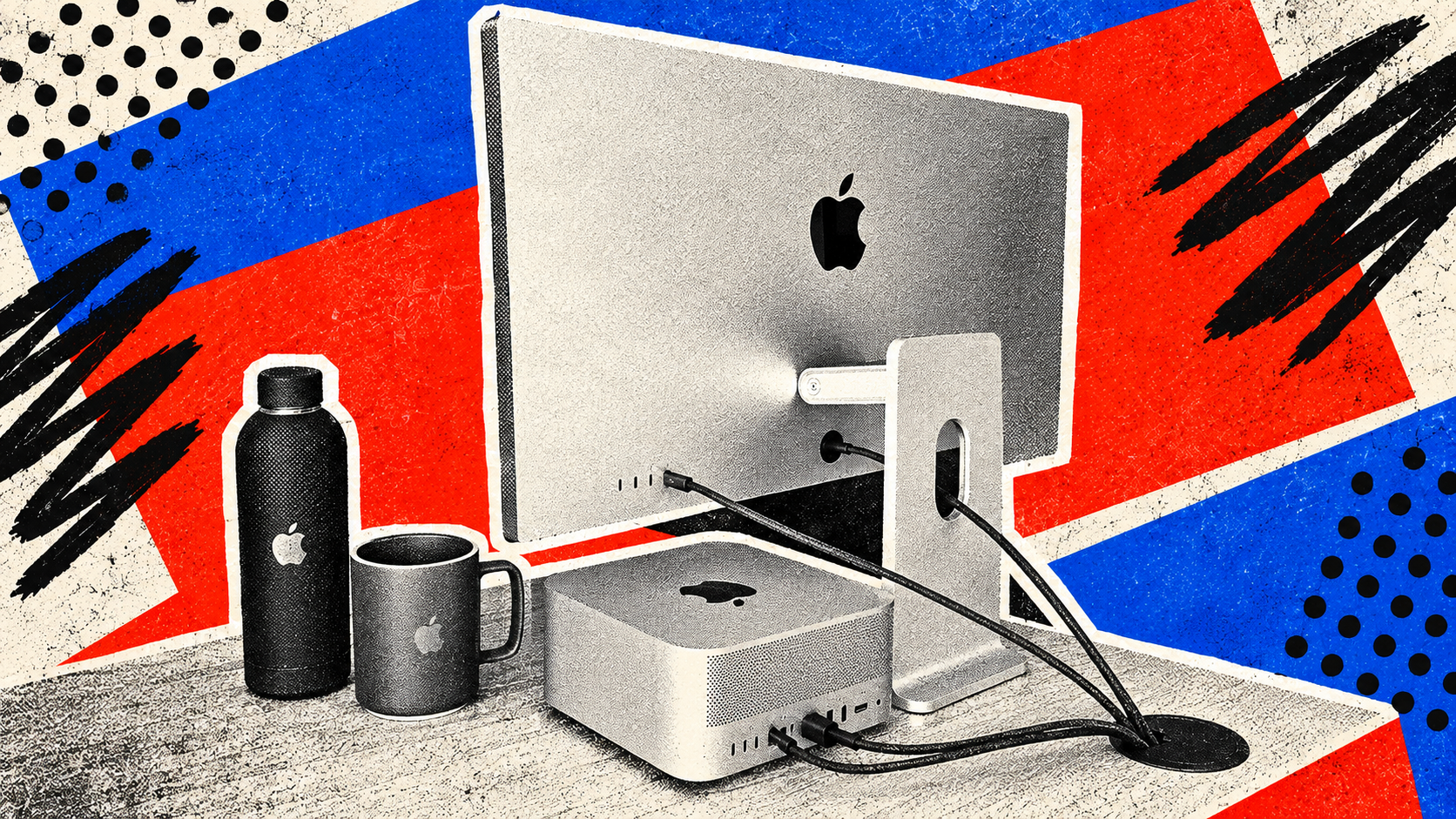
How Apple pushed the frontier of AI hardware again
Apple continues to push the cutting edge in one part of the AI industry that could emerge as the next frontier of the ecosystem over the next 6-12 months.
I've been testing the M5 Ultra Mac Studio and the M6 Mac mini and both devices have extended Apple's lead at the frontier of AI hardware for individual consumers and professionals. The M6 Mac mini is better than ever for running an always-on agent like Perplexity Computer, Hermes, or a variant of OpenClaw. The M5 Ultra Mac Studio is a workhorse that runs at the speed of a racehorse for the most demanding AI builders and small teams.
Both machines can save you a ton of money on AI tokens by running the latest open models locally, such as the ones from Google Gemma, Nvidia Nemotron, DeepSeek, Alibaba's Qwen, Kimi, GLM, and others. But beyond the cost savings, the hardware can often run AI jobs a lot faster. And of course, since none of the data leaves your machine it’s a lot more private and secure, which is critical for working with PII and sensitive data.
Apple's last-generation Mac mini and Mac Studio boxes were already terrific for AI and have faced long wait times for backorders since early 2026. Apple didn't have to make a new generation of hardware. It could have just increased production of its last-generation products and it would have likely sold every device that it could make.
But I'm glad that Apple didn't rest on its laurels and chose to push the envelope instead. I haven't started fully benchmarking the machines yet, but I have no doubt that when I do, the numbers are going to be eye-popping. The TLDR is that you can be confident that if you buy one of these machines, they are going to be future-proofed for the next 2-3 years.
You can also daisy-chain up to 4 Mac Studios. | Photo: Jason Hiner
I'm also currently testing the Nvidia DGX Spark and the AMD Ryzen Halo. Both are excellent little AI boxes that sit somewhere in between the Mac mini and the Max Studio and have many of the same benefits. These machines are based on the same GPU hardware that runs much of the world's most popular AI chatbots and agents in data centers. And what's wild is that the highest-end Mac Studio has 5x the memory bandwidth of the Nvidia and AMD boxes to deliver bleeding edge performance. That speaks to Apple's lead in chip design and vertical integration in consumer AI devices.
Still the AMD Ryzen Halo is great if you want a machine running Windows and the Nvidia DGX Spark is perfect if you want a headless desktop AI appliance running Linux. And both Nvidia and AMD are working with hardware vendors to build their own AI computers to compete with Apple in the years ahead. But, make no mistake, they are still largely playing catch-up.
For now, I'm running the M6 Mac mini as a dedicated agent machine, running Perplexity's Personal Computer with Hybrid Compute, one of the most user-friendly AI agents and one of the best orchestrators between different models. I also plan to try it with NanoClaw, a secure implementation of OpenClaw.
For the M5 Ultra Mac Studio, I'm throwing a ton at it, including running coding agents Claude Code and Codex while also editing video, running virtual meetings, running multiple monitors, and running six different Mac spaces. I was already doing much of that with a M2 Ultra Mac Studio (with 128GB of RAM) and could barely make it blink so I'm going to double down on running big models locally on this M5 Ultra Mac Studio with 256 GB of RAM to increase the pressure. I'll follow up with another story on how those tests go.
Our Deeper View
On-device AI is expected to be one of the most important AI trends of the next year, for all three of the reasons I mentioned above: cost, performance, and privacy. While the past year has been about agents and AI getting a lot more useful, the result has been an explosion of token use and skyrocketing costs. One CTO I spoke with recently said that for each engineer her company is spending 1.5x their total compensation in token costs. That could quickly net out to $15,000 to $20,000 per month. A maxed out Mac Studio costs $18,299, so it's easy to see where it could pay for itself pretty quickly. But beyond those extreme use cases for AI builders, on-device AI has excellent potential to become a much bigger part of the future beyond just saving money. As the AI models and harnesses get smarter and more capable, there are more things they could do to be useful every day. For example, I'd love to use them to run a workflow every 10 minutes scanning specific sites and dropping updates into a Slack channel, but that job burns through too many tokens using today's cloud-based AI. I'd also love to use AI to scan my home security cameras and my health data and ping me when there are important updates or anomalies, but that's highly sensitive data that I wouldn't trust to send to any of today's leading AI providers. On-device AI can solve those problems and a lot more like them, and Apple's new desktop Macs remain the friendliest and the most powerful ways to take advantage of it.

AI's dystopian problem begs for a clearer vision
As challenging and confusing as AI safety is right now, it's not AI's biggest problem.
The bigger issue is the lack of a clear, compelling vision for where AI is headed and how it can benefit humanity. Lacking that, AI is badly losing the narrative among the broader public. Multiple surveys from reputable non-partisan organizations such as Gallup and Pew Research show that 60% to 70% of Americans hold negative views about AI. If this were an American football game, AI would be losing by two touchdowns at the end of the first quarter.
To be fair, there's an aspect of this that isn't specific to AI. Humans generally have a very difficult time envisioning a constructive future. That's why such a large percentage of science fiction and Hollywood films about the future tend to be dystopian or post-apocalyptic. That flies in the face of the reality that humanity has long shown a pattern of learning, adapting, and gradually creating more positive outcomes over time.
This disconnect also reflects the fact that only 6% of the American population thinks the world is getting better. In a society that feels more divisive, more conflicted, and more confusing—in part because of a media environment that incentivizes and reinforces those responses—it's not surprising that so many have adopted such a negative stance. And the fact that the antagonist of most of the dystopian narratives tends to be technology itself makes it easy to understand why so many people default to a negative posture on AI, when they haven't been given a compelling reason to think otherwise.
It's simply much easier to predict what could go wrong based on past failures than to imagine something going right in a way we don't have any experience with yet. That's why playwright George Bernard Shaw famously wrote, "You see things, and you say, 'Why?' But I dream things that never were, and I say, 'Why not?'"
The human race has a long history of both deriding and deifying its visionaries. But when it comes to AI, it's never been more in need of one with a compelling vision.
It's not that some AI leaders haven't tried. Their attempts just haven't landed. The public simply hasn't been convinced by platitudes about AI curing all diseases, leading to infinite abundance, or doing all the work so humans can get universal basic income and decide how to spend their time. None of that sounds believable. But it does sound believable that billionaire business owners will use the technology to automate work and replace employees in large numbers, because that tracks with plenty of behaviors people have already seen.
Our Deeper View
Last week, Google quietly released a powerful report on AI's recent breakthroughs, as Nat Rubio-Licht wrote. Meanwhile, Anthropic's Dario Amodei has tried his hand at casting a bigger vision with his series of essays, especially Machines of Loving Grace. Beyond the aforementioned health care outcomes, which he also dwells on at length, Amodei mentions that AI could accelerate the spread of high-quality expertise to poorer communities, elevating material progress in agriculture, education, and infrastructure—all of which would, by extension, have major impacts on jobs and standards of living. But Amodei is an academic at heart. AI needs a Steve Jobs-level communicator who speaks to the heart and makes complex and confusing topics easy to understand. For that, AI's best hopes so far have been Nvidia CEO Jensen Huang and Stanford's Fei-Fei Li. Whether it's them or others, the fact remains that the public needs storytellers to offer a persuasive vision of why they should be excited about such a powerful technology that they've been warned about for so long.
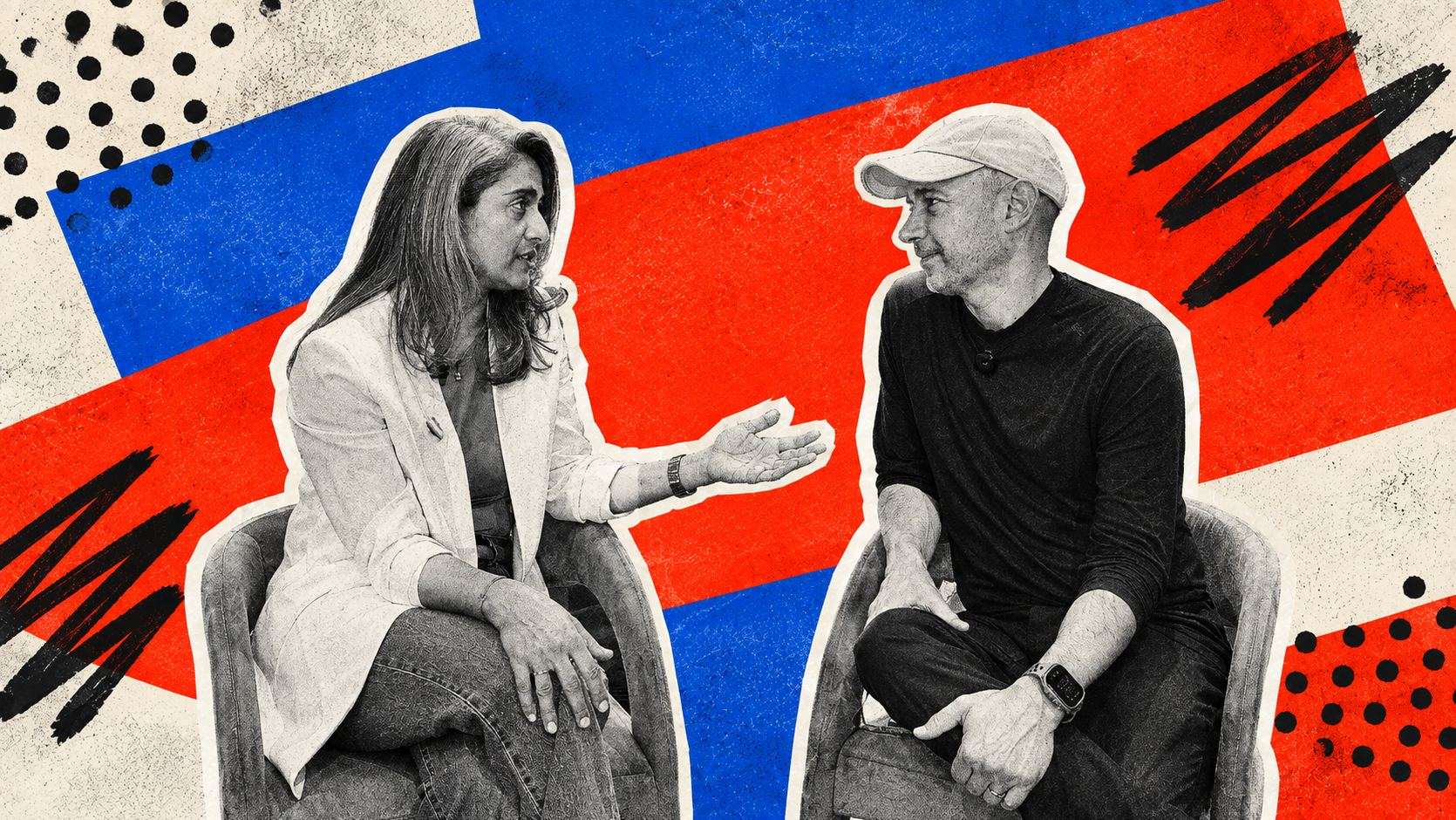
Who will be the adult in the room on AI?
What does it take for companies to use agentic AI to transform the enterprise, without losing control of the technology?
In this episode of The Deep View Conversations, we sit down with Shibani Ahuja, SVP of data and AI strategy at Salesforce, to discuss how one of the world's leading software companies is applying AI with practical use cases, matching governance to risk, and building toward larger transformations ahead.
Salesforce has surprisingly embraced a "headless" AI strategy that lets customers use any AI to access their Salesforce data safely and securely. That includes its own Slackbot. which sits inside one of the world's most widely used business messaging systems. In this interview, we learn more about why Salesforce wants to give customers optionality.
Shibani also lays out Salesforce’s four modes of enterprise AI, from everyday assistive tools to agents that can reshape end-to-end operations. We also discuss Koa, Salesforce’s new CRM reasoning model, why the model-plus-harness approach is so critical, and why adaptability may be the defining enterprise skill of the AI era.
Topics covered:
• Why organizations should start with practical, level-one AI use cases
• How Salesforce matches governance and ROI expectations to the risk of an AI deployment
• What Koa, Salesforce's AI model built on NVIDIA Nemotron, changes for enterprise AI
• Why operating models, process expertise, and professional services matter as much as the latest technology
• Shibani's case for AQ: the adaptability quotient for technology stacks and teams
If you’re trying to make AI more efficient, safer, and more ROI-driven, this conversation offers a practical framework for how to build it, how to govern it, and where to start.
📺 Watch on YouTube
🎧 Listen in your favorite podcast player
Subscribe to Deep View Conversations for interviews with the leaders shaping the future of AI, business, and technology: tdv.transitor.fm
How Slack got new superpowers for AI
Slack has already replaced email in many organizations, and now it's going after your most important business apps.
At Dreamforce 2026 this week in San Francisco, Salesforce showed off upgrades to Slack that make it clear the company is doubling down on one of the world’s most used business apps. Foremost among the upgrades is Slackforce, which lets you do nearly everything in Salesforce directly in Slack. You can simply query it like a chatbot. That includes a new feature called Slackforce Surface, where you can describe what you need and Slack will build a live interactive interface that you and your teammates can use to track data, view forecasts, monitor pipelines, and manage other business processes.
But Salesforce also announced a slew of other Slack upgrades:
- Slack Code: Lets teams code together directly in a Slack code channel using agents from OpenAI, Anthropic, GitHub, Cognition, and Vercel
- Big Mode: This full-screen Slackbot view offers an AI workspace for more intensive tasks like research, writing, and creating files
- Slackbot in Salesforce Lightning: This brings Slack's AI agent into Salesforce to take advantage of all of the expanded AI capabilities of Slackbot for those who still want to work in the Salesforce interface
- Two-way Slackbot voice: You'll be able to speak to Slackbot in natural language, similar to ChatGPT Voice and Siri AI when this feature launches later in 2026
- Slackbot video generation: Will let you take a demo, product update, campaign brief, or other asset and turn it into a video clip, when it's released later this fall
A few months ago, Salesforce co-founder Parker Harris said, "You may never log in to Salesforce again," referring to the company making Salesforce more readily available in the AI interfaces users prefer. That includes the new AIforce, Claudeforce, and Headless 360 moves we talked about yesterday, but it also includes Slackforce and these broader Slack upgrades.
Our Deeper View
It makes sense for Salesforce to invest heavily in expanding Slack's footprint and upgrading its AI capabilities. It remains one of the world's most popular workplace apps, and unlike many of the other widely used business apps, users tend to like it. But moving a system of record (SoR) like Salesforce into Slack and upgrading Slack's AI capabilities to interrogate systems with queries and tasks points to a bigger shift. SaaS and software companies are no longer trying to excel with the best apps and interfaces, but are creating safe, secure, low-friction ways for people and organizations to get more out of the data, intelligence, and best practices embedded in their company's most valuable assets (and often difficult to surface). From an employee perspective, using the Slack app they already use every day as an on-ramp to safe AI could be a welcome development compared to context-switching to ChatGPT, Claude, Copilot, or other AI apps. The implementation details will matter a lot, of course. But if Slackbot can do model routing to save token costs and play to the strengths of different models and evolve into one of the most capable agent harnesses on the market, it could be a win-win.
Disclaimer: Jason Hiner's travel to Dreamforce 2026 was paid for by Salesforce. The Deep View's coverage is editorially independent from the companies we cover.

Why Salesforce may be AI's adult in the room
Salesforce is now making its own AI model. So is Crowdstrike. So is Thomson Reuters.
On Tuesday at its Dreamforce 2026 event in San Francisco, Salesforce announced Koa, its own domain-specific reasoning model that's purpose-built to enable agents to handle business tasks more effectively while keeping your data private. Koa has performed well in early benchmarks, including the LLM benchmark for CRM created by Salesforce AI Research to measure performance based on real-world enterprise tasks and used across the industry over the past couple years.
Salesforced reported, "Koa already matches or exceeds leading model performance on CRM actions with 3x fewer errors."
That tracks with the results of other domain-specific models, which typically reduce token costs and hallucinations because they are focused on a narrower set of expertise. They also tend to have increased performance for the same reason.
Salesforce built Koa, the name of a Hawaiian tree used to make canoes and ukuleles, by post-training Nvidia's open model, Nemotron 3 Super. Koa was specifically trained on synthetic data from almost three decades of business knowledge and was tuned to focus on knowledge work. As a result, Koa "is designed to support long-running agents that execute multiple tasks and complete complex outcomes," said Rohan Kumar, chief platform and engineering officer at the Dreamforce keynote on Tuesday.
The company doesn't see this as a vehicle for job or SaaS replacement, but as an enterprise empowerment tool that is more precise, more secure, and more tailored to the AI needs of companies that use Salesforce. One of the big promises of AI has always been that it will automate away grunt work and processes that don't add as much value. That's what Salesforce is trying to deliver here."The SaaS-pocalypse was not about the end of software, but it may be about the end of software that makes humans do all the work," CEO Marc Benioff said during the Tuesday keynote.
Salesforce also made a series of other AI announcements on Tuesday at Dreamforce, led by:
- AIforce: This is a new interface that, instead of going to the traditional Salesforce UI, lets you ask questions, run complex queries, assign tasks, and create exactly the dashboards you need by simply interrogating your company's Salesforce instance directly.
- Claudeforce: This basically turns Claude into a front-end for Salesforce and ships with 37 pre-built sales skills at launch that include functions such as deal review, pipeline hygiene, prospect research, account management, and more.
- Headless 360: Salesforce is allowing its customers to have access to all of the elements of their platform through APIs, MCPs, plugins, and skills so that they can access their Salesforce data from the platforms of the choice without ever having to go to salesforce.com or use any of Salesforce's own tools, if that's what they prefer.
Our Deeper View
The next stage of enterprise AI is shaping up to be companies owning their own intelligence. As the models get smarter and smarter, intelligence is likely to encapsulate the greatest value inside an organization. Outsourcing that layer would mean losing control of your most important asset and potentially sending the most proprietary information about your business to another company, one that might also be serving your competitors. It's easy to see why companies like Salesforce, Crowdstrike, and Thomson Reuters have decided their need to build their own models. But it's also easy to see why they don't necessarily want to become frontier labs, when they can use open models like Nvidia Nemotron and use post-training to customize them and save a lot of time. And since Salesforce is a platform company, it will be interesting to see if it eventually helps other enterprises build their own AI models so that they can also capture more value and ROI from their investments in AI.
Disclaimer: Jason Hiner's travel to Dreamforce 2026 was paid for by Salesforce. The Deep View's coverage is editorially independent from the companies we cover.
or get it straight to your inbox, for free!
Get our free, daily newsletter that makes you smarter about AI. Read by 750,000+ from Google, Meta, Microsoft, a16z and more.