Sabrina Ortiz
Sabrina Ortiz is a Senior Reporter at The Deep View. Previously, Sabrina led AI coverage at ZDNET. Sabrina graduated with an M.A. in Journalism, Business and Economics Reporting from the Craig Newmark Graduate School of Journalism at CUNY and a B.A. in Media and Journalism and Political Science from the University of North Carolina at Chapel Hill.
Articles
Mistral sees a market the AI giants may miss
Mistral has always targeted enterprises and technical use cases. Now, it's doubling down.
On Tuesday, the French AI lab announced it is building new models aimed at industrial engineering and other regulated sectors. The company said its goal is to give these fields access to frontier, sovereign AI models that offer the benefits of open models, such as full control over the model and the ability to own and customize it. It is focusing specifically on industrial engineering, which it calls AI’s second wave after software engineering, given how much the industry stands to gain.
"Engineering, similar to other regulated industries like finance and energy, must run on proprietary data, specialized models and systems no one else can switch off," said Arthur Mensch, CEO and co-founder of Mistral, in the post. "That is what sovereign AI delivers, and it is why the most demanding organizations in the world are building with Mistral.”
The new models and capabilities build on Mistral Large 4, nicknamed Le Chonk, which the company claimed at launch was as capable as the best closed models while competing with open-weight models three times its size. That release focused heavily on coding and cyber defense, with Mistral calling it the world’s leading open model for agentic coding and state-of-the-art among open models for cyber defense. Another selling point is that it was trained in Mistral’s own European data centers, using less money and compute than closed labs typically need. This is particularly notable as the debate around data centers continues to pick up in the US.
Mistral shares that the industrial engineering models are designed to accelerate R&D and create products across a range of industries, including semiconductors, manufacturing, automotive, aerospace, and energy. The company's acquisition of Emmi AI earlier this year, which offers expertise in the physical AI space, will contribute to these efforts. No exact timeline was shared.
Our Deeper View
Open models keep gaining momentum, driven in large part by the steady stream of highly capable releases coming out of China. For enterprises, the appeal is clear: the biggest advantage is owning your models outright, customizing them to your exact business needs, and never having to worry that a provider will sunset them without warning. Closed models have real strengths too, particularly in reliability and security, since the provider typically handles maintenance. But the more companies I talk to, the more I see how widely their needs vary, and in that environment, more choice is better. I think there’s a sizable market for Mistral to capture, even if it won’t match the scale of what Anthropic and OpenAI have built.
Why the IMF is worried about AI circular financing
Circular financing, in which investors put money into companies that in turn hand it back for buying products or other investments, may appear to offer quick returns, but the International Monetary Fund (IMF) warns the practice carries significant long-term risks.
The IMF estimates that circular financing has grown to just over $1 trillion, with two-thirds funded by debt, said IMF director Kristalina Georgieva in an interview with CNBC. While that is not a "huge size," she does say it represents a rapid increase. This is especially notable as the world economy relies on AI, and any fluctuation in that market can affect worldwide economic growth.
“We have a world economy that is standing on one leg on the AI leg. If this leg wobbles, that can lead to financial stability troubles,” said Georgieva in the interview.
The debate over circular financing is especially timely now that Nvidia, one of the practice’s leading proponents, is now in the spotlight. A scandal over its CEO and co-founder Jensen Huang's extramarital affairs forced him out and rippled through the stock market, wiping more than $1 trillion off the company’s market value over the past month. Beyond shaking investor confidence, the upheaval raises the question of what happens if Nvidia’s next leader pulls back on these creative financing deals.
That now looks likely: according to The Wall Street Journal, CFO and interim CEO Colette Kress was skeptical of many of the deals when they were signed, and Huang himself had begun laying the groundwork to scale back the approach before he resigned.
Nvidia’s own disclosures show how far this practice has spread. As of July, its equity investments were valued at $99 billion, up from about $7 billion a year earlier and about $2.2 billion two years before that, CNBC reports. Most of the money has gone to frontier AI labs, with Kress saying Nvidia has invested nearly $50 billion in them. However, the companies likely to feel the impact of any Nvidia investment pullback are the neoclouds Nvidia has invested in, which have more to lose, Shiva Rajgopal, Ph.D., professor at Columbia Business School, told The Deep View.
"The first to feel it would be the smaller AI cloud providers and model developers that rely on Nvidia for capital or capacity guarantees, not the big cloud companies, which fund themselves more or less," said Rajgopal.
Huang reportedly even warned its neocloud partners about it at its conference in Berlin last month, telling them that they would need to secure upfront payments from customers so it was easier to finance and Nvidia wasn't the sole financer. The same WSJ report cites an analyst note which predicts that Nvidia's financing pullback could take $50 billion or more out of the market.
This could, in turn, affect Nvidia itself. "Accounting history is a caution here: in the late-1990s telecom boom, equipment makers financed their own customers, and revenue fell sharply when the financing stopped. Nvidia’s situation is different, with far stronger customers, but that’s the question investors will ask," added Rajgopal.
Our Deeper View
The turmoil surrounding Nvidia goes far beyond interest in Huang's personal life; it's more about what a change of guard means for leadership ideology, which significantly impacts the entire AI industry and can even have repercussions for the world's economy, as Georgieva warns. However, this is still a separate question from what will happen to AI itself, and that answer is clearer: the technology is not going anywhere. While Sam Altman has some self-interest in sharing optimistic statements about the industry, the logic of what he said at Semafor’s Silicon Valley & The World conference on Monday is sound: "The revenues and demand are growing so strongly that I think the industry will be fine."
ChatGPT Wallet puts trust before autonomation
Your AI agent isn't meant to simply answer questions. Now, it can reach into your wallet and charge your card, thanks to OpenAI.
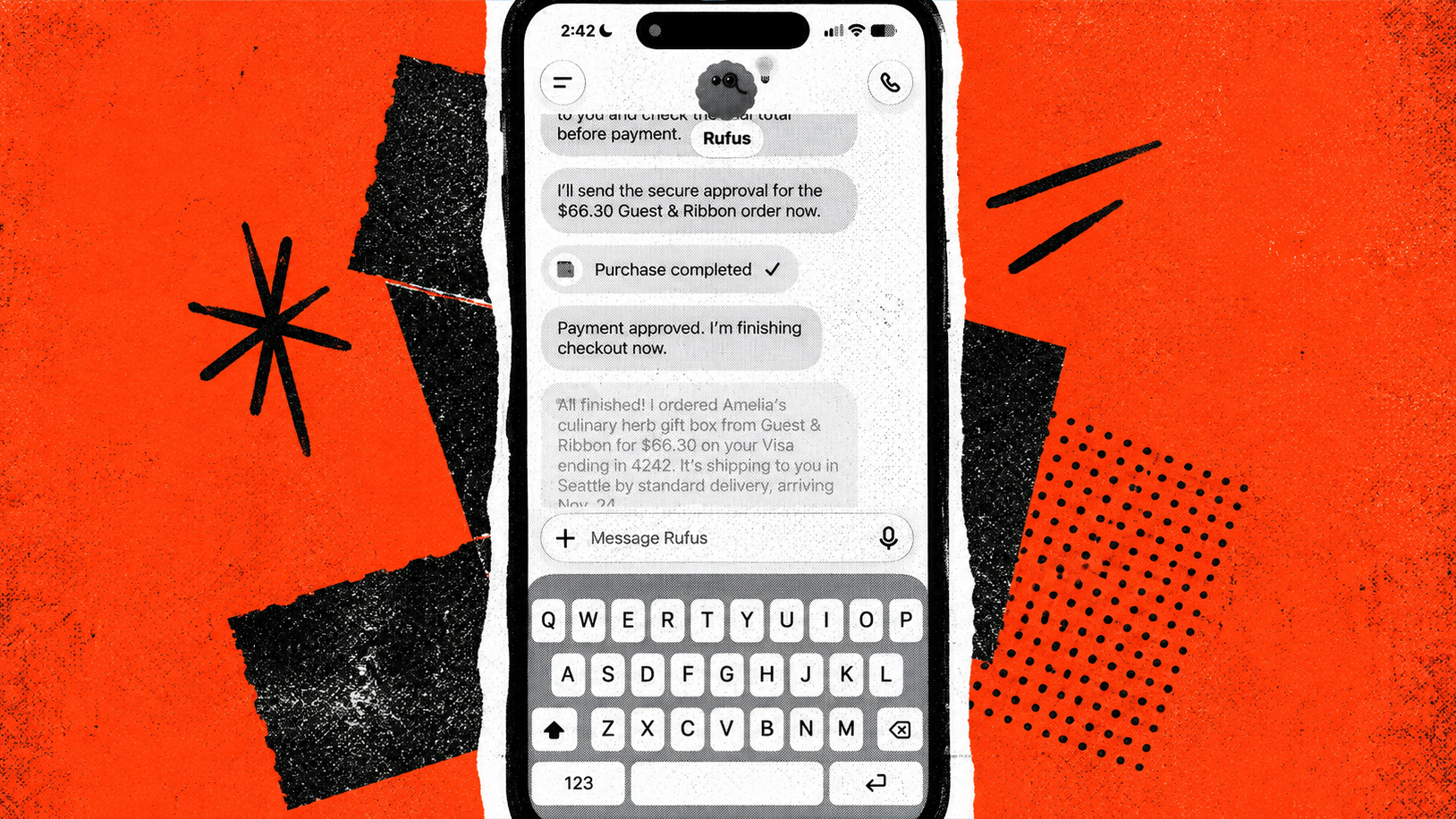
On Friday, the AI lab unveiled ChatGPT Wallet, a feature that lets agents make purchases without access to a user's actual card details. To ensure only approved transactions take place, it requires a security check before every purchase, such as Face ID or a fingerprint scan.
Once it is approved, the payment network provides a token that hides the user's card information. This means that users only have to enter their card information once, making checkout more seamless while preserving card rewards and dispute protections.
OpenAI argues there is significant demand for the feature, as many of the 1.2 billion weekly ChatGPT users rely on it to research products and decide what to buy. With ChatGPT Wallet, users can now take this behavior a step further, allowing the chatbot to complete the purchase.
At launch, it will roll out to a limited number of users, as OpenAI says it intends to "learn from real-world use and work with businesses, banks, and payment networks to improve compatibility and reliability." For now, the feature is only available through its Dots agents for ChatGPT Pro subscribers in the US.
Over time, OpenAI said the goal is for users to be able to "delegate" purchases entirely to their agent by setting clear parameters, including spending limits and purchase categories, and pre-approving those purchases. However, the technology still has a long way to go.
Last week, credit card giant Visa released its Agentic Commerce Benchmark, claiming it's the first of its kind to test AI in realistic shopping scenarios and challenges. The first round of tests involved 22 different AI models from 12 labs that took on 15 shopping challenges, and the results overwhelmingly found that the models are not ready. The selected AI models achieved a benchmark pass rate of 57.2% across testing, with even the best-performing models only passing 82.2% of attempts.
Companies and merchants are also pushing against AI shopping agents: United Airlines announced last week that it's banning AI agents from booking flights, restricting access to its digital platforms indirectly via travel agencies and aggregators to prohibit use by third-party personal agents and assistants. The airline claims that the decision seeks to protect its customers' data and accounts, citing concerns that AI assistants could expose sensitive information and lead to unintended actions and purchases by the chatbot.
Since company cooperation is also crucial for agentic payments to be possible at all, OpenAI also published a Commerce Partner Playbook with tools and guidance to help businesses enable agent support in their existing systems.
Our Deeper View
The concerns about sharing payment information with agents are not only natural but, as Visa's research shows, valid, as the technology is not ready for this task. However, I think that OpenAI's first steps with ChatGPT Wallet are actually a responsible, measured, and helpful approach, as it makes users' lives easier without putting much at risk. In this case, using the term "agentic" may even be a bit of a reach, as it more closely resembles a convenient auto-fill tool most users are already familiar with and comfortable using. The biggest difference is that ChatGPT doesn't share users' credit card information with the site, which, if anything, gives users additional peace of mind.

The cost of keeping the internet human
I walked up to a sleek orb, a camera embedded in its surface, and stared into it for a few seconds as it scanned my iris, all to prove I was human. Although it sounds like a scene from a sci-fi film, this is reality with World ID.
As AI grows capable of replicating a human likeness with unnerving accuracy, proving that you are human online is becoming more critical than ever. Tools for Humanity, a company founded in 2019 by Alex Blania and Sam Altman, is offering a unique solution to prove humanity through its World protocol that scans people's irises.
This summer, the company celebrated three years since launching World, and has since accumulated 18 million users who are verified with World ID's iris-scanning orbs and hold a Proof of Human marker. Once verified, users can take advantage of exclusive access to human-only opportunities, such as reserved event tickets, a human badge on dating apps, and even the ability to prove during a video conference that they are who they say they are.
The human verification process is straightforward. Interested users can visit one of over 100 physical orb locations worldwide, spread across cities such as London, Munich, San Francisco and Tokyo, and simply have a photo taken of their iris and face, for the system to confirm that they are a unique, flesh-and-blood human. In my experience, it took no longer than a minute. Once the process was over, I quite literally said, "That's it?"
Of course, the technology behind it is anything but simple.
Behind the scenes, advanced cryptographic techniques are at play from the moment the photo is taken until the user is verified, ensuring the system can accurately distinguish humans from bots and, most importantly, that the user's biometric data remains secure, even partnering with reputable universities to do so, the company told me at the "World Lift Off" event in April, where I got to prove my humanity.
It was learning that information that prompted me to spend the last couple of months digging into more about the company, its cryptographic techniques, and its mission, all to ultimately answer the question: Can people actually trust the process?
The eyes: the window to the soul
One of the most intimate things people can share is eye contact. It's so deeply ingrained in our culture that we have common sayings like "the eyes are the window to the soul," or iconic movie lines such as "the eyes, Chico, they never lie."
Yet, here comes a tech company asking people to feel comfortable not just looking into that window, but reaching through it. Naturally, many people are apprehensive. The company says it anticipated this reaction.
"You're used to offering your hand to someone you just met; yet, your eyes are somehow the most private part of your body, it has a lot of advantages, because it's very hard to get someone's resemblance without them actively participating, unlike fingerprints, which I can just get from that bottle [that you touched] if I wanted to," said Remco Bloemen, head of Blockchain at World Foundation. "But, it does make the whole process a lot more intimate."
So why risk alienating potential users when far more palatable biometric markers exist? The answer lies in entropy, or random differentiation: the more unpredictable the information, the more unique it will be, making it more effective at differentiating one person from another.
"We wanted to build something that could actually scale to a billion people. This was a hard requirement for us that forced us into the direction of iris codes," said Bloemen. "Irises have this really cool, complex pattern, which is about as complex as a QR code, and it's not genetic. It's entirely random. It's early in embryonic development that it crystallizes by itself, fully random, into these beautiful patterns, which contain a lot of entropy."
World cites research claiming that a scan of a human eye can have over 200 bits of entropy. Although fingerprints have been a common method for identifying people, they are not as unique as they may seem, Bloemen told The Deep View. Backing that claim, World also cites research that found that a fingerprint has approximately the same entropy as an 8.3-character password, far from unique enough to distinguish eight billion individual humans.
Biometric entropy numbers can be misleading, however, according to Joshua Copeland, director of cybersecurity at Crescendo AI and professor at Tulane University. Because the data comes from human bodies rather than a random generator, he said, traits tend to overlap, scanner quality skews the results, and a template’s bit length overstates its real strength. Still, he said, iris codes are stronger identifiers than the alternatives.
"Entropy is significant because it quantifies the distinguishing information present in a biometric representation. For example, an iris pattern typically contains more discriminative information than a single fingerprint," Copeland said. "A thumbprint may suffice for local device verification, whereas an iris code can offer stronger differentiation at a population scale"
Faces pose similar challenges, with genetically related people having similar faces, or even the same one, in the case of twins.
Ultimately, it is in the user's interest for the means of verification to be as airtight as possible, as it gives World's verification system credibility: if a person is verified, this assures that they are a human that was only verified once, as opposed to a bot or a human operating swarms of accounts.
Iris codes may be better identifiers than the alternatives, but that raises a harder question: why should anyone trust World with theirs? Bloemen’s answer lies in what he calls "cryptographic magic."
Behind the magic
Getting started is simple: download the free World ID app from Apple or Android, then visit an in-person Orb to have your iris scanned, a process far less intimidating than it sounds. All you have to do is let it photograph your face and eyes.
The Orb is essentially "a fancy camera," Tiago Sada, CPO at Tools for Humanity, told me. An onboard Nvidia chip lets it verify on the device itself that a real person is standing in front of it. The photos are then encrypted and sent straight to your phone, where they’re stored, so nothing stays on the Orb itself.
Because users hold their own photos, Sada explained, they’re protected, both from leaks if the company is ever breached, and from the company itself deciding to monetize their data.
"The fact that only you have those photos is a first and really big thing, and already very different than how CLEAR would work at the airport, or how a normal social network would work. In all those cases, [user] information is stored on a server, in a database," Sada added.
CLEAR, a biometric identity service, lets members bypass the airport ID check by verifying who they are with facial biometrics. Unlike World, CLEAR stores biometric data itself. Its privacy policy lists faceprints, fingerprints and iris scans among the information it may collect, along with contact details and government-issued ID. The company says it does not sell biometric data, but it can share personal data with TSA, partners and service providers, and when legally required.
World takes a different, more complex approach. The Orb converts the photo into an iris code, a unique string of numbers that the company says can’t be traced back to the original image. Using a process called anonymized multi-party computation, or AMPC, that code is split into pieces stored at separate institutions around the world, or node operators, including the University of Erlangen-Nuremberg, UC Berkeley’s Center for Responsible Decentralized Intelligence and the Korea Advanced Institute of Science and Technology.
"Very importantly, those pieces never come back together, and even if they did, the only thing you could do is see the hash, which doesn't tell you anything about a person, as it's some random number that cannot be reversed to the photo of the Orb," explained Sada.
To contextualize it further, Sada likened the process to mixing paint. Splash different colors onto a white page and blend them, and you end up with one unique color that can’t be pulled apart again. Cut that into tiny puzzle pieces, scatter them globally, and "anyone that has one of those little pieces, they have no idea," Sada added.
In addition to keeping the system going, the node operators are meant to keep World honest. "Our role is to bring independent, rigorous scrutiny to these frameworks, to aid in ensuring that infrastructure like World ID is built responsibly, securely, and transparently before it scales broadly," a UC Berkeley spokesperson told The Deep View.
The system compares the AMPC fragments derived from your unique humanness code against the existing AMPC fragments, which are stored on decentralized, independent nodes, to make sure you are unique and haven’t registered more than once, running complex mathematical calculations across a set of independent nodes, like Berkeley, without revealing anything more than a confirmation as to whether or not that user has been scanned before.
Once verified, users never have to share their iris data again. Instead, when logging into an app, their phone generates a zero-knowledge proof showing they hold one of the verified World IDs, without revealing which one.
"A zero-knowledge proof, or ZKP, allows one party to prove that a statement is true without revealing the secret information used to prove it," Copeland explained. "The prover generates a cryptographic proof, and the verifier checks that proof rather than independently processing or viewing the underlying private data."
While both ZKP and AMCP "are among the most promising privacy-enhancing technologies available," Copeland warns that neither should be treated as "cryptographic magic," as ultimately, the real-world success depends on other factors such as how the surrounding system is operated.
What can you do with your World ID?
The process of being assigned your World ID is frankly anticlimactic compared to how sci-fi the outcome feels. Once a user has signed up, users will already have the World ID App downloaded on their devices, as it's needed to start the verification process. Once verified, there is a middle tab that looks similar to a driver's license logo where you can view your World ID, which displays the word "Human." Tap it and it says "verified unique human" and the date you were verified.
If you need to show a third party "proof" of your humanity, you can click on the "proof of ownership" tab and get an encoded proof, or a complex string of letters and numbers that you can copy and paste over. Some integrations are easy to link to right from the app.
For instance, with Tinder, if you link your World account, you get a badge that proves that you are a real human instead of a bot, as well as additional perks, such as five free boosts. World Music allows verified humans to purchase from a select pool of tickets, attempting to circumvent ticket scalping.
World ID Deep Face for Zoom lets you prove you’re not a deepfake in a virtual meeting, and ask others on the call to prove the same.
That, however, raises an additional question: if World only verifies that you’re human, not who you are, how can it tell that the face on screen belongs to the person who was verified? The answer lies in the photos on your phone. After joining a meeting, participants take a selfie, which is compared against the images the Orb captured at sign-up. If they match, a "Human Badge" appears on their tile in Zoom.
Brendan Ittelson, Zoom’s chief ecosystem officer, said integrating with World ID was a "natural fit," as Zoom looks for ways to raise trust in collaboration and give customers options to establish it. He noted that AI is making impersonation easier to scale, increasing the need for solutions that address evolving trust and security risks.
"It's exciting to see where the technology has evolved and how easy and user-friendly they've made it to do a strong biometric check in a user-friendly way. In terms of my experience and others that I've talked to, they're actually surprised how quick that enrollment occurs," said Ittelson.
Additionally, World has developed a number of Proofs, or second-layer products, which companies could choose to build on and integrate into their own platforms.
- World has developed "Proof of Age," which works by letting users tap an NFC-enabled ID document to their phone, then generate a proof that they’re over 18 or 21 without revealing the document’s underlying personal information. The data stays on the user’s device.
- In October, World also added Proof of Attributes, which confirms specific information from an official government credential, such as nationality or being over a certain age, using a government ID, as well as Proof of Presence, which provides a quick liveness check on a phone to prove that a person is present.
- Several of these, including Proof of Presence, Proof of Attributes and Proof of Human, are being marketed by World for banking and financial services use cases, a sector that is particularly vulnerable to deepfake fraud.
The possibilities for the integrations that could be built on top of the World protocol are nearly endless. For instance, Bloemen explained that, theoretically, it would be possible for this to be used in airport security.
"The US government or another foreign nation would be issuing this identity, and if we build the right integrations, we can use this in our app," said Bloemen. "So now you don't need to share your entire passport document when you check into a hotel; for example, you can just give a zero-knowledge proof that you are who it says on the bill."
The World ecosystem in itself is massive. Beyond World, which is the proof of human protocol discussed in this article, Tools for Humanity also operates the World Money app, which is described as a "financial super app" that brings together stablecoins, payments, investing and earning, and more. To make matters more complex, Worldcoin (WLD) is the "native token" or cryptocurrency of the real human network, a digital asset that can be used in experiences determined by the community, such as participating in Mini Apps, platforms, protocols, services and more that are built on World, as described by the company.
However, to verify your personhood or use the World Protocol, you do not need to be involved in Worldcoin or the World Money app. While these are part of the World Network, they are an optional part of the experience, similar to how a user can have a Google account and then separately choose whether they want to use services such as Gemini, Google Wallet or Google Docs.
The World protocol offers a way for people to avoid being duped by AI, but it doesn’t address the underlying problem: tools that make realistic fake content cheap and easy to produce. Among the companies building those tools is OpenAI, led by Sam Altman, who also co-founded Tools for Humanity.
That doesn’t make World’s solution any less worth exploring, but it raises a bigger question: how much responsibility do AI companies bear for slowing the fraud their products enable? Scams long predate AI, but it's undeniable that the tech has exacerbated the issue. Deloitte predicted in 2024 that generative AI could push US fraud losses to $40 billion by 2027, up from an estimated $12.3 billion in 2023.
We’re already living in a world where you have to prove you’re human, and that burden will only grow. The harder pill to swallow is that the same industry creating the problem is also selling the fix.
The AI boom has already outgrown Jensen Huang
The exit of AI's biggest evangelist from the stage will change some things, but AI transformation and adoption across industries will continue apace.
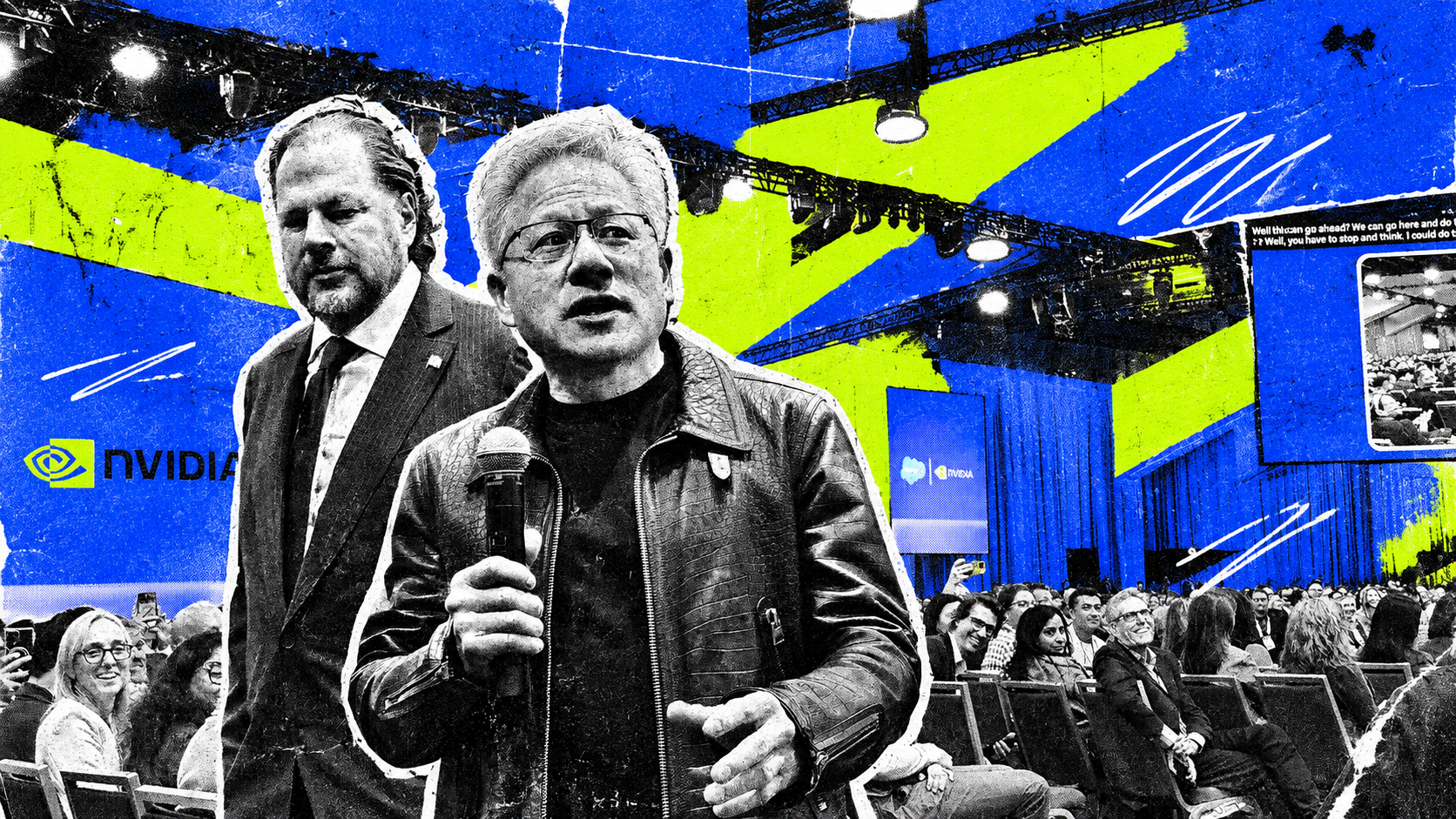
On Thursday, the Nvidia board of directors announced that Nvidia co-founder Jensen Huang had resigned as president, CEO, and a board member, effective immediately. Huang's exit comes just days after he confirmed his extramarital affair with a woman whom US intelligence has accused of being a Chinese spy, and the report broke of another affair with a direct report, Nvidia's VP of healthcare, Kimberly Powell.
The interim CEO will be Colette Kress, Nvidia's current EVP and CFO, who will continue to serve in these roles until a successor is named. The company's structure is also changing, with Harvey C. Jones, former Synopsys CEO, appointed as its first-ever board chair. The board disclosed that it is already initiating a search for a permanent CEO.
People are already placing bets on Polymarket regarding who the next CEO may be, with Ian Buck, Nvidia VP and high-performance computing chief, leading the betting odds, followed by Kress and Rene Haas, CEO of Arm Holdings, with analysts making similar predictions. President Trump took to Truth Social to propose former Apple CEO Tim Cook as the next pick. While it is hard to say with confidence who will succeed Huang, since there was no plan in place to prepare the company for this moment, what we do know is that they will be pivotal in defining the entire AI industry, as Huang himself did.
During his tenure, Huang became one of the most influential figures of the current AI boom. Under his leadership, Nvidia invested heavily in its own customers, including cloud providers, suppliers and major AI labs, and some of that money returned in the form of chip purchases. Analysts have flagged these arrangements as potentially circular, while others argue they are a strategic way to lock customers into Nvidia’s ecosystem. If a new CEO scales back these investments, it could raise financing costs for companies that relied on Nvidia’s backing and reduce some of Nvidia’s own revenue.
Huang also became a prominent voice in Washington, and his close relationship with President Trump coincided with several policy outcomes favorable to Nvidia. According to CNBC, Huang and other Nvidia executives directed at least $26 million toward Trump-backed projects, and the company spent a record $2.15 million on federal lobbying in the third quarter. Huang lobbied against the GAIN AI Act, which would have restricted chip exports, and against state-level AI regulation in favor of a single federal framework. In December 2025, Trump approved sales of Nvidia’s H200 chips to China, though Beijing has blocked them.
The uncertainty of what is to come in the next era of Nvidia is already being seen on the stock market. As of November 12, Nvidia shares "tumbled more than 12% in early trading, putting the company on course to lose about $500 billion in market value," Reuters explained. Nvidia reached an all-time high $5.8 trillion market cap on October 6. Recent losses have pushed the value of the company down to $4 trillion.
Our Deeper View
Huang helped define how the AI industry builds and funds itself, with Nvidia acting as both supplier and financier to many of the leading players in the ecosystem. If a new CEO steps back from that model, the effects could ripple outward. That said, AI is now embedded in nearly every industry, and demand for the technology isn’t going away, even if the stock market and investors sour on the AI trade and its effects spread across the industry. The train has already left the station when it comes to enterprises and organizations of all sizes investing in AI to streamline work, enhance productivity, and transform their relationship with software. While Nvidia's path forward may change how AI companies get financed, it won't change the fact that the years ahead are going to be all about a lot more professionals and organizations putting AI to work in more and more practical ways.

Google's eyewear play hinges on Gemini
After years of anticipation, Google's AI glasses are finally here, and the question everyone is asking is how they measure up.
On Thursday, pre-orders opened for the new Intelligent Eyewear collections, a collaboration brought to life by Google, Samsung, Gentle Monster, and Warby Parker. The glasses let users capture video and photos with the 12-megapixel ultra-wide camera, listen to audio with the open-ear speakers, and notably, utilize Gemini assistance with a simple tap of the frame.
A key theme of the release is accommodating user choice, with the glasses working across Pixel, Samsung, and iOS phones with a nearly identical experience on each. Gentle Monster's six designs are a bit bolder for those willing to take more of a risk with their style, starting at $449. Warby Parker offers three styles, which it says were all inspired by its most beloved silhouettes and starts at a slightly more affordable price of $395.
Regardless of designer or style, the glasses felt very light at only 41 grams — about 10 grams less than the lightest Ray-Ban Meta Gen 3. The glasses are also meant to offer users 9 hours of battery life, which is on par with Meta's most competitive offering.
Pre-launch, I had the opportunity to wear them at three different events, totaling about three hours of use, and got to talk to the people who worked to bring these models to life. In my testing, I found two major standouts: Gemini and privacy.
My most practical use case for my Meta Ray-Bans has typically been the audio experience, as the mics and speakers are excellent for hands-free calls or music and podcast streaming. I was pleased that the Intelligent Eyewear's audio was just as compelling, with the addition of more useful AI through Gemini, so much so that I can see myself using the AI features as much as I use the audio features.
Gemini seamlessly connects to popular Google apps, such as Gmail or Maps. I trust it with access to my information, which gives it the context it needs to be truly helpful. While I could do the same with Meta AI, connecting it to all my apps is a more manual, tedious process.
Additionally, I don't trust Meta with all my personal data given its history, which brings me to my next point: Google has been particularly careful with this release to address all privacy concerns users would have, taking a number of precautions to make users more comfortable, such as:
- The LED recording indicator light can't be tampered with
- Camera visuals aren't saved in your Gemini History or used for AI training or ad targeting
- The data stored on the glasses is encrypted
- The glasses redact faces before sending images to Gemini
- Gemini is designed to focus on the user's voice, not picking up conversations around you in which the individuals wouldn't be consenting to being recorded
Given the negative public perception of AI glasses as a result of Meta's devices, Google's strict stance is crucial for it to have any chance at success. It also may be enough to remedy some of the bad PR that smart glasses currently have, paving the way for more trust in the product category.
“Our strategy here is that we’re coming in at a time where the history has not been written yet on this category, and we want to raise the bar on privacy," Juston Payne, senior director of product management for XR at Google, told me.
Our Deeper View
I’ve always felt the AI glasses category has struggled because, in my experience, its best use case has been audio. Yet, the real promise of AI glasses is giving an assistant context for what you’re seeing and doing, so it can help you from your point of view. After my brief time with these glasses, I think Gemini may be what finally cracks that code. I could see myself reaching for it instead of my phone in many situations. For instance, I could ask how far away my next meeting is and whether it would be faster to take the train, drive, or walk, saving time that I would have otherwise spent jumping between apps because I'm comfortable giving Gemini access to the context of my Google Calendar and Maps. While I wish the hardware design had taken a bigger leap to set it apart from competitors, Gemini makes enough of a difference to give these glasses a real competitive edge.
Why Claude's workplace play threatens incumbents
Anthropic is looking at more ways to broaden its enterprise lead by targeting productivity tools.
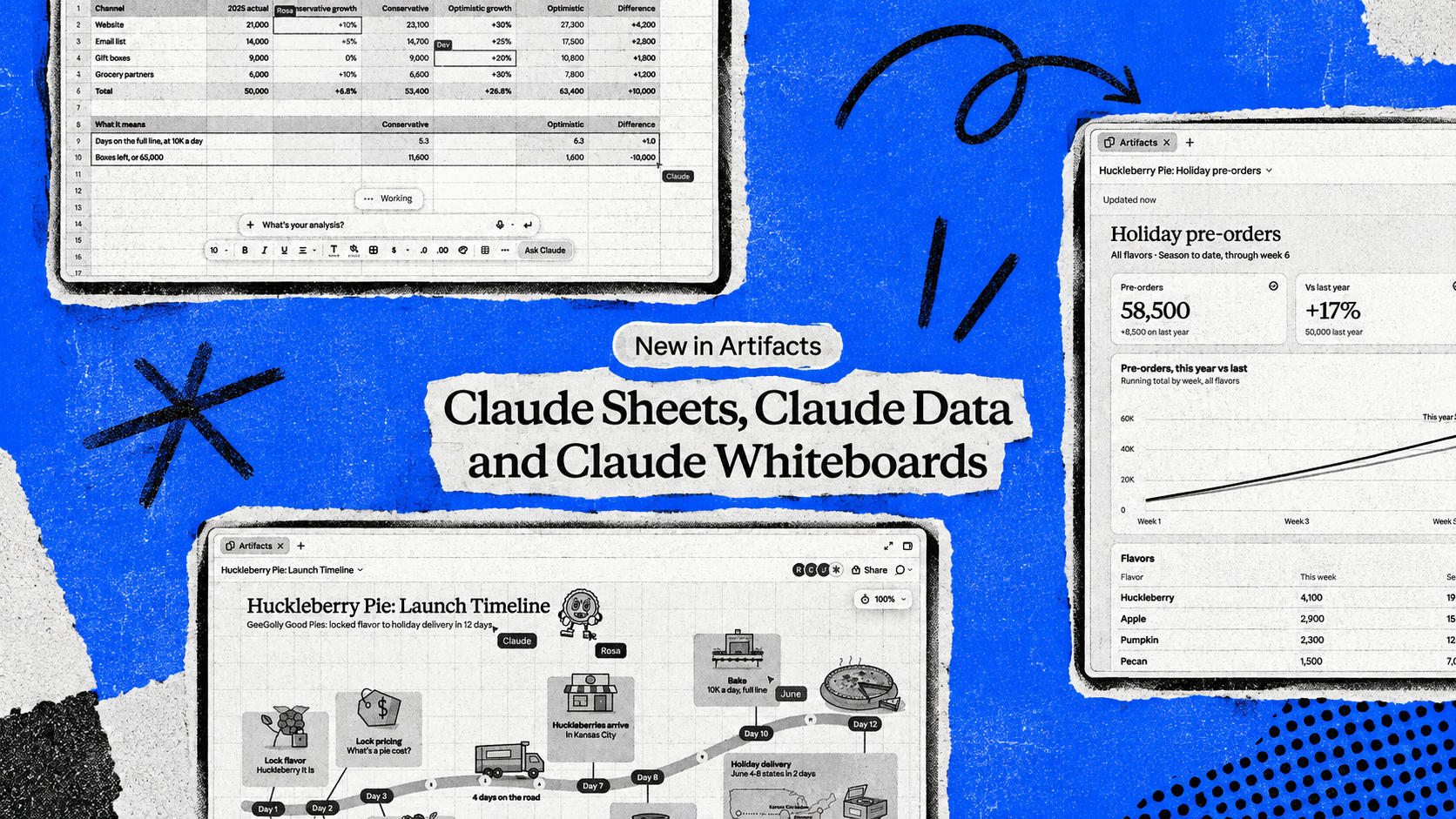
On Tuesday, Anthropic announced a new suite of Claude tools, including Meetings, Whiteboards, Sheets and Data, and more powerful interactive connectors. These join Anthropic's existing tools, such as Docs, Slides, Design, and Motion, which the company says have helped people create more than 45 million docs, decks, and designs.
The Claude ecosystem is becoming so expansive that it rivals those from Google or Microsoft, creating proprietary solutions for a large array of workplace tasks that integrate the context and assets that organizations have shared with the model.
"For years, we've learned to work around software. Now Claude works around you," said Ami Vora, chief product officer at Anthropic.
The standout offering of the new suite is Claude Meetings, which lets Claude join video calls as a visible participant, like Otter.ai or Fireflies.ai. Claude Meetings, however, goes a step further than these competitors, moving from notes and conversations about the meeting to action, such as laying out a timeline on a whiteboard, or using the work apps people have already connected to pull up last year's numbers. At launch, it will be available in beta on Team and Enterprise plans.
The other new tools are more catered to specific areas of knowledge work:
- Claude Whiteboards: a shared board a team can work on with Claude, available in beta on paid plans.
- Claude Sheets: a spreadsheet that Claude builds and edits with a team, available in beta on paid plans.
- Claude Data: formerly known as Claude Dashboards, helps connect Claude to companies' data repositories, such as a data warehouse or CRM. It is now generally available on all paid plans.
Anthropic also launched interactive connectors to all plans, including free users. With this, users can link Claude to the apps they already use, giving Claude the information it needs and enabling it to take action from there. If this sounds familiar, it's because interactive connectors have been tested since January, showing a small live view of certain apps in Claude chats. Now, Claude can launch full apps within its interface that look like they would on a partner site.
Our Deeper View
Ultimately, this update delivers one big win: eliminating context switching for users. Even though working professionals may be used to using one software for most of their careers, they may be incentivized to switch if they already rely on Claude as their primary AI chatbot or assistant. For instance, even if you're a Microsoft Excel user, you may want to start by using Claude Sheets to edit and create spreadsheets. Because you can still export work as Excel files, you don't compromise the compatibility. Rather, you just optimize the creation process. While competitors like Google and Microsoft already have AI assistants within tools employees already know, at this point, apps like Claude are well-established in many employee workflows, earning them a great deal of user trust and context. With AI, you're most likely to keep using the tool you are most familiar with, not only because you know how to talk to it, but because what it has learned from you helps you get the answers you need faster.
Adobe turns rival AI into a reason to stay
As creatives brace for an AI takeover, Adobe has a different story to tell.
At its Adobe Max conference on Tuesday, the creative platform launched a suite of new AI tools across its flagship Creative Cloud tools, including Photoshop, Illustrator, Premiere, and After Effects, to automate tedious parts of the process. Most of the new features focus on unlocking a new level of precision or detail that would be time-consuming to do manually, emphasizing useful AI assistance over AI for AI's sake.
“We're powering a new era of creativity where creators and creative professionals at every experience level have the tools, models and agents they need to bring their biggest ideas to life and stand out with work that reflects their unique taste, style and vision, while staying in control of every outcome,” said Anil Chakravarthy, Adobe's president and incoming CEO, in the release.
There are so many features that it's difficult to list them all. Here's a quick overview of some of standout upgrades:
- Adobe Creative Agent: This powers the Firefly AI assistant (beta) and is meant to act as a creative partner that can do tasks across apps with just a conversational text prompt.
- Always-on agents (preview): Can do tasks in the background, like preparing social content, according to Adobe.
- Firefly Image: Brings a new set of editing tools such as Edit Object, Relight, and Retouch.
- Firefly Builder (private beta): Lets users create websites, presentations, or apps using natural language
- Open Eyes: Available in public beta, replaces closed eyes with natural-looking results.
Ironically, the most impactful announcement has little to do with Adobe at all: local MCP integrations, launched in preview. This lets creatives use the third-party AI model of their choice to make local changes to their Photoshop, Illustrator, Premiere, and After Effects project files. The project's layers, vectors, bins and sequences stay editable. This is a major win for users because it reduces the need to switch between AI chatbots, especially when you have built a memory with one tool. For instance, a marketer who has already given ChatGPT all its brand assets, tone, and style won't have to re-explain them to implement those elements in an Adobe project.
Our Deeper View
There's a common misconception that AI use in creative spaces will naturally replace the artist. While some companies have tried that in the past, like the failed Coca-Cola AI holiday ad, I doubt it will work on a large scale because it always meets user pushback. What ultimately connects art with people is the story behind it, and artificially generated stories won't cut it because something feels inherently unnatural, unfamiliar, and lacking. As the title of the piece I wrote on this exact topic suggests, "AI should replace the scaffold, not the artist." It's good to see many of these Adobe tools fall into that category.
Nvidia scandal exposes AI's accountability gap
Nvidia built an empire on AI, but its CEO's own actions may now be the company's biggest threat.
Over the weekend, confirmation of Nvidia CEO and co-founder Jensen Huang's extramarital affair was released as Jensen sent an internal message to the company apologizing for his actions, admitting to having been "unfaithful" to his wife and "deeply sorry." While that information alone would be enough to cause headlines, the woman involved is Alice Huang, who US intelligence has accused of being a Chinese spy.
If you track the AI scene closely, you may already know that The New York Times broke the initial story about US intelligence investigations into the relationship at the end of October. Huang initially defended the relationship, telling Bloomberg News his dealings with Megaspeed International, where Alice Huang is a top executive, were "normal and not unusual." Jensen's admission in the internal memo has revived the story.
While many more details about the nature of the affair are in the in-depth New York Times article, the focus now turns to the aftermath, as the Nvidia board of directors issued a statement that goes as follows:
- The board is "initiating an independent investigation in light of recent reporting that founder and CEO Jensen Huang has been the target of a foreign intelligence effort."
- The board has "no reason to believe that either national security or Nvidia secrets were compromised."
- Jensen will cooperate with the review, which a committee of independent directors will conduct with help from outside independent counsel.
- Nvidia has also stated that Jensen will continue to lead the company as CEO during the investigation, and that the board expressed its "confidence in Jensen and his leadership team."
China has since denied engaging in attempts to spy on Nvidia's CEO, claiming the allegations are part of a smear campaign against Beijing. Lastly, as of Sunday, President Trump has defended Huang, telling reporters he would still take him on the trip to China and "I haven’t heard he’s done anything wrong…He dealt with somebody, but you know, so does everybody else." Despite both of these efforts to minimize the allegations, the markets have spoken, with Nvidia stock falling 5% as scrutiny mounts.
Our Deeper View
For investors, a company’s reputation is a key indicator of its health. So while a CEO’s affair is a personal matter, it can move markets, which is why The Deep View is covering it, even though we aren’t in the business of gossip. The details of this case also make it relevant to the wider AI market: US intelligence officials suspect the woman involved is a Chinese spy, and, reportedly, the Trump administration was aware of the concerns but chose not to act because of its close relationship with Huang. This makes the case for an independent regulatory body, just as the Hugging Face incidents did earlier this year. The AI race is now so contested that governments will go to great lengths to get ahead, whether that means recruiting spies to gather intelligence or ignoring espionage warnings for political reasons. An independent auditor and mandatory security-risk disclosures would make it harder for high-risk situations to slip through the cracks, which matters all the more as investors pour billions into the industry and national security depends on the models they are producing.
or get it straight to your inbox, for free!
Get our free, daily newsletter that makes you smarter about AI. Read by 750,000+ from Google, Meta, Microsoft, a16z and more.